Living Building Challenge Series: Registration and Just Label
We firmly believe that a diversity of voices in our studio and design processes creates a richness that we're passionate about protecting and fostering. Our Corporate Social Responsibility committee is eager to issue our 2024 report, outlining our efforts to create an equitable and diverse workplace that acts as a force for good in the world and values, promotes, and supports its people. We're proud of the work we've done thus far, and motivated to recognize, address, and work on our shortcomings.
Our studio aims to reflect and act on our organization's social, moral, and environmental obligations, to ensure our collective efforts represent our values, and to move our practice towards a more responsible architecture that brings greater purpose and impact to our work.
In 2024, Feldman Architecture earned a Just Label certification. To complete this in-depth, self-reporting process, we spent a year reviewing and discussing our studio’s operations and policies, reflecting on where we wanted to focus our efforts and allocate resources to create a more equitable practice.
The Just Label, run by the International Living Future Institute, functions similarly to a nutrition label that scores organizations on socially just and equitable operations and policies. As a voluntary disclosure tool, it’s a transparency platform for organizations to disclose specific information about their operations, from employee demographics and benefits to financial and community investments.
The score for each Just indicator ranges from 0-4. To receive score of 1, the organization needs to have a policy written specifically addressing the indicator and its requirements, while each subsequent point raises the bar substantially. Receiving a 2 in certain categories required significant discussion and policy changes, which we were excited to make. We are very proud of our Just label certification and have set 1-year and 3-year goals to continue to level-up.
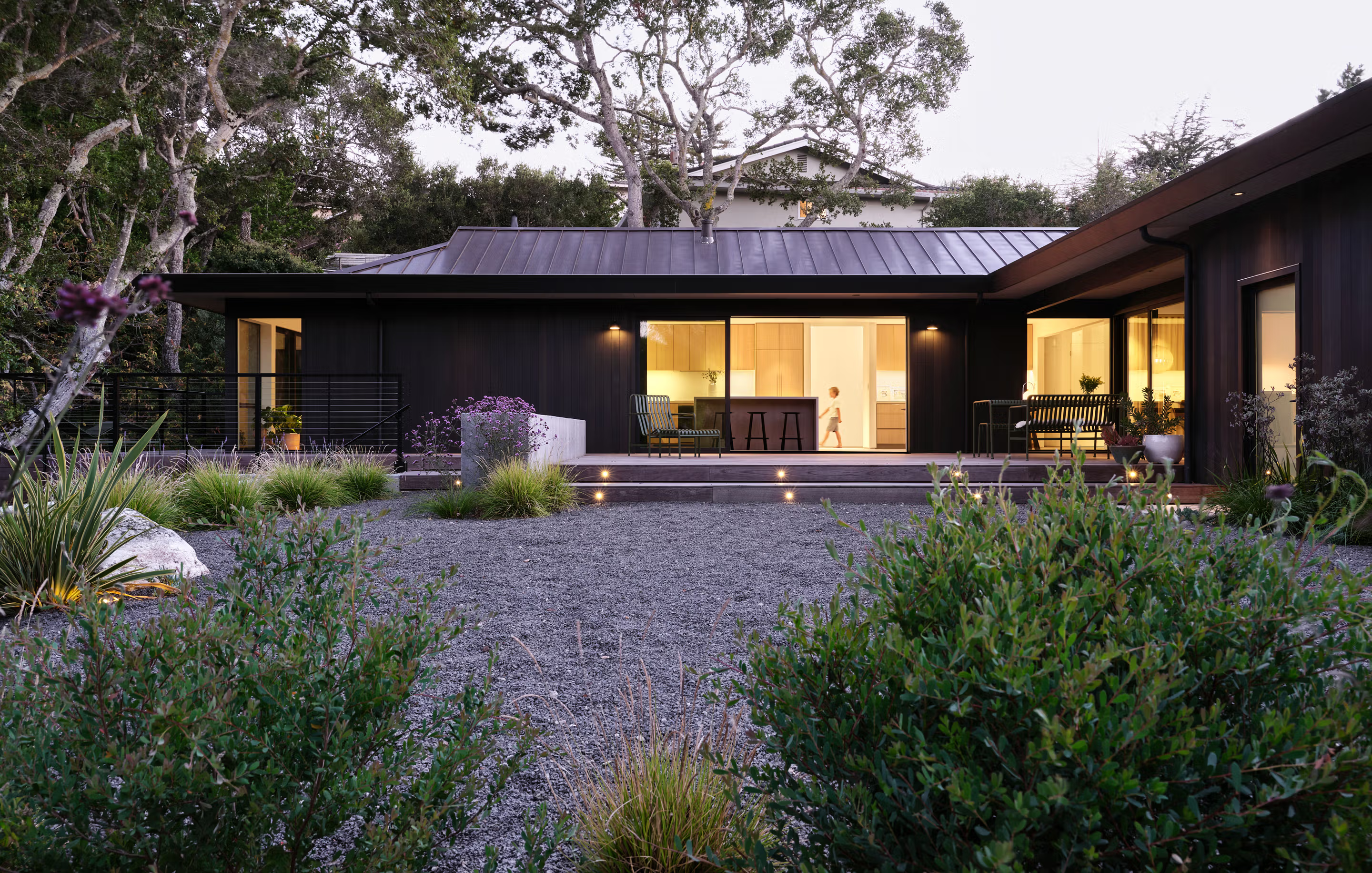
Happy Earth Day! This year we’re excited to add an installment to our Living Building Challenge blog series, tracking our progress with Curveball, which will aim to be our first project to achieve a Living Building Challenge certification, as well as the first residential certification at CORE level or higher in California. The Living Building Challenge is an ever-evolving certification program enacted by the International Living Future Institute, and is considered the world’s most rigorous proven performance standard for buildings. The regenerative design framework aims to create spaces that give more than they take – connecting occupants to light, air, food, nature, and community. LBC certified buildings are self-sufficient, remain within the resource limits of their site, and create a positive impact on the human and natural systems that interact with them. We hope that Curveball can serve as a case study in residential buildings that not only mitigate their environmental impact, but also are net positive and regenerative. Click here to see an interactive map of current registered and certified projects.
Our most recent milestone involved successfully registering the project with the ILFI as a living building – a process in which the institute scrutinizes the application, ensuring that the building’s design will at least reach the CORE certification standards, which even without obtaining additional “petals,” are extremely rigorous. A major hurdle in the approval of our application involved communicating the unique significance of the site and its surrounding community – the Santa Lucia Preserve. The Preserve is a land trust that includes 18,000 acres of protected land, as well as 2,000 acres of land strategically carved out for residential development. Once a parcel is purchased within the 2,000 acres of land dedicated to development, the owners commit to dividing the site into homeland and openland – meaning that a very small part of the site can contain a building footprint. The owners act as stewards of their own lots, with help from the Santa Lucia Conservancy, which is dedicated to the conservation of the other 18,000 acres and works to keep that land open for public use.